
Mental Care Therapies Ltd
Specialist autism, ADHD & mental health support
Psychological Formulation & Understanding
What is formulation?
Formulation is a way of making sense of what is happening beneath the surface. The goal isn't to label or judge. It's to understand.
Together, we explore questions such as:
- What might be driving these behaviours or emotions?
- Why do certain situations feel particularly difficult?
- What needs are not being met?
- What patterns keep repeating?
- What support or changes might help?
You will receive a written summary that brings this information together in a clear, practical, and easy-to-understand way.
Who might benefit from formulation work?
Formulation can be helpful for:
- Children, young people, or adults who are struggling but are not yet ready for therapy
- Families who want to better understand a child's behaviour and how to respond supportively
- Individuals waiting for an ADHD or autism assessment
- People who have recently received an ADHD or autism diagnosis and are trying to make sense of their experiences
- Parents feeling overwhelmed by emotional, behavioural, or school-related difficulties
- Professionals seeking a clearer understanding of a young person's needs


In-Person Therapy
Traditional, in-person therapy usually takes place in a therapist’s office and has long been used as an effective treatment for many different mental and emotional health problems.
Talking to a professional can help you overcome obstacles in your life, gain awareness of the root cause of your problems, manage symptoms, and heal.
I offer two locations Colne and Padiham.
Sand Tray Therapy
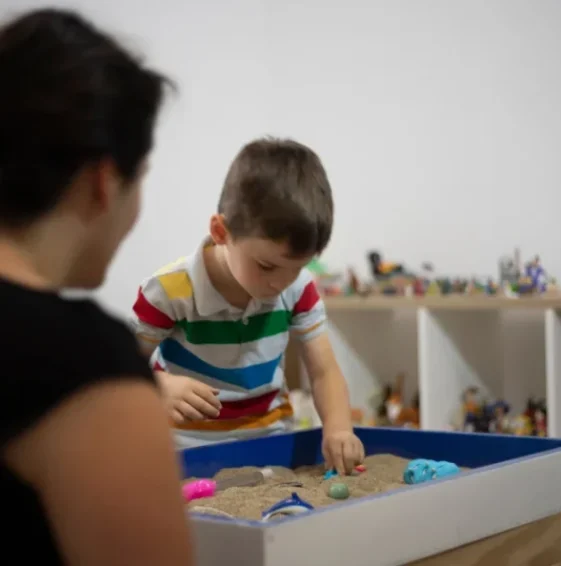
Working in CAMHS I understand engaging therapeutically with children or young people can sometimes require creativity. I provide Sand Tray therapy for children and young people as an alternative to traditional talking therapies.
What is Sand Tray Therapy?
Sand tray therapy is a hands-on and expressive approach that uses miniature figurines and sometimes water to build scenes and stories within a sand-filled tray.
Who is Sand Tray therapy for?
Sand tray therapy is used for people who have experienced a traumatic event such as abuse or a shattering incident. Sand Tray therapy has been shown to help with ADHD, anxiety, depression, divorce, grief, and school related problems. Although this type of therapy is used most often with children, sand tray therapy also can be helpful for teens and adults.
How does Sand Tray Therapy work?
Sand tray therapy can help increase emotional expression while reducing the psychological distress that may come from discussing traumatic events or experiences.

Professional Supervision
I work in schools with teachers by providing group Counselling Supervision using Page and Wosket’s Cyclical model.
What is counselling supervision?
Counselling supervision provides a safe space for professionals to use the services of a therapist to reflect the way they work and explore individual or collective feelings.
What is the Cyclical Model of supervision?
This model pays attention to five areas that are closely linked with each other. These are:
- Contract – terms agreed between the supervisor and the supervisee/therapist
- Focus – what the work is going to be about and how each session is going to look
- Space – reflective, exploratory and developmental work that takes place throughout the process of supervision
- Bridge – the way the supervision session allows the supervisee to bring what has been worked on back to the sessions with his/her clients
- Review – an opportunity to re-contract and talk about how the supervisory relationship is going, what is working well and what is lacking and needs re-formulating and work.
© Mental Care Therapies Ltd
powered by WebHealer